
Home / Review
Wall World Strategy Review
Addictive vertical colony survival hampered by difficulty spikes and clunky controls.

Contents
Wall World Strategy: 69% positive from 210 Steam reviews, 24-hour peak of 218 players, priced at $16.99, SteamGame.ai potential score 65/100 (data as of 2026-11-22). Source: SteamGame.ai (Find the next hit before it hits.)
Pros
- Absorbing blend of vertical colony survival, tower defense, and cave mining
- Faithful expansion of Wall World lore with adjustable difficulty and active balance patches
Cons
- Severe difficulty spike in the second campaign scenario and punishing, unskippable disasters
- Missing hotkeys, awkward cryopod and repair menus, and no one-click rebuilding
- Crashes, pathfinding bugs, and a short three-scenario campaign
Clinging to a sheer vertical cliff face turns town planning into a desperate balancing act in Wall World Strategy. Developed and published by Alawar for $16.99, this spin-off moves the Wall World universe away from its pixel-art roguelike origins and into survival colony management mixed with tower defense and subterranean mining. Across 201 Steam reviews, the game currently holds a 70% positive rating. Many players praise how its interlocking resource, defense, and excavation systems create a tense, absorbing planning loop that captures the high-stakes pressure of Frostpunk. However, several reviewers warn that a brutal difficulty spike in the second campaign scenario, clunky controls, a brief three-mission story, and disruptive bugs hold the current version back.
Surviving the Vertical Frontier
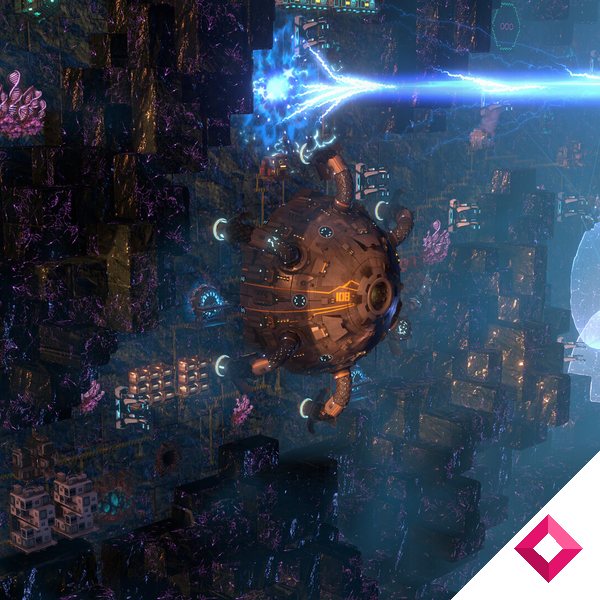
Juggling surface construction and underground expeditions keeps your attention split across multiple fronts from the opening minutes. On the face of the endless Wall, you build housing, food production, power grids, and research labs for your colonists while erecting defenses against waves of Zyrex monsters. At the same time, robo-spiders head into subterranean mines to gather ore and recover the cores needed to advance the main story. Many players enjoy how these layered mechanics interact, where a single greedy expansion or miscalculated storage limit can cascade into a colony-wide emergency. Surface production also skips tedious delivery logistics, a detail two reviewers appreciate alongside the readable 3D building models and 2D event illustrations, even if an unclear main-quest objective left one colony scrambling for cores on day 40. Existing lore carries over well from earlier entries, yet several critics argue that the survival template leans too heavily on Frostpunk and Ixion, with social dilemmas and monster designs that lack the atmospheric cohesion of the classics it emulates.
The emergency events completely destabilize and ruin the game. Its absoluitely trash and impossible to keep playing if you run out of metal and are unable to build pathways back due to metoers.
A Jagged Difficulty Curve
Campaign pacing swings sharply from an approachable opening tutorial to a punishing wall of attrition in the second scenario. Once that second mission begins, your colony is saddled with over a hundred unhoused and unemployed residents, meager starting supplies, early waves of rock-throwing monsters, and multi-day weather hazards that drain water or cut power for a full day unless you have fans ready. Many reviewers point to this difficulty spike and the highest difficulty setting as heavily unbalanced, forcing repeated restarts when a single slip-up spirals out of control. Random disasters like acid rain, meteor showers, spreading fires, and black holes add further frustration because counterplay mostly boils down to spamming shields or paying mineral repair costs. During these multi-hour thunderstorms and meteor barrages, time acceleration locks up completely, and destroyed buildings leave behind no ghost outlines or one-click rebuild buttons after the storm clears. Ironically, surviving into the mid-to-late game flips the problem around, as infinite mining drills and a simple combination of missile turrets and machine guns trivialize later monster waves. Still, several players note that adjustable difficulty sliders help soften the learning curve and credit the developers for quickly patching down random event damage, including reworking black holes into percentage-based health drains.

Clunky Controls and Technical Snags
Managing emergencies in real time becomes much harder when the interface fights your inputs at every turn. Many players criticize the absence of basic quality-of-life features, most notably a hotkey to batch-toggle defensive towers on and off when reallocating power and workers. Thawing new workers from cryopods cannot be queued or capped, and switching between miners, engineers, and general laborers mid-cycle resets thawing progress to zero. Because structures hang vertically on the Wall, buildings cannot be rotated, and robo-spiders cannot step over constructed facilities, occasionally forcing you to demolish your own base layout just to let a spider pass. Fixing storm damage requires manually locating the maintenance workshop inside a crowded colony to click the repair-all button, while frequent event pop-ups repeatedly cancel fast-forward and pause the action. Presentation and stability show rough edges too, with one reviewer flagging repeated misspellings of Zyrex in expedition text and another praising the music while suspecting the 2D event CGs of AI generation. Worse still, several reviewers report run-ending technical bugs, including frequent crashes to desktop, corrupted save files, spiders freezing over mine shafts, and enemies walking off the map border or straight through solid rock walls. Combined with a brief three-scenario campaign that omits deeper crisis departments and power systems beyond what appeared in the pre-launch demo, the current release feels noticeably rushed.
This review is based on 57 Steam player reviews and store data. See all reviews on Steam →
Quick answers
How long does it take to beat Wall World Strategy, and what modes are included?
Several reviewers report that the story campaign contains only three scenarios, with completion estimates ranging from around five to eight hours for the whole campaign up to 11 hours for the first two missions depending on retries. Two reviewers also mention an endless mode and 15 sandbox maps without story events, while one player who logged nearly 16 hours notes that campaign missions end immediately once the story concludes, preventing you from continuing to explore the full tech tree.
Do you need to use the robo-spiders and underground mines in every mission?
Based on a couple of player reviews, underground exploration is mainly used to gather extra ore and unearth the cores required to advance the main story. One reviewer points out that finding three cores is mandatory before day 40 in the first scenario, while another critic notes that apart from the second scenario, robo-spider mining feels largely optional once surface production stabilizes.
By the NumbersUpdated 2026-11-22. Data updates on a daily schedule.
- Potential score
- 65 list metric, not a quality score
- Positive (all languages)
- 69% Mixed
- Total reviews (all languages)
- 210
- New reviews/day (7d)
- 11
- Peak players (24h)
- 218
- Price
- $16.99
- Release date
- Nov 11, 2026
- Developer
- Alawar
- Publisher
- Alawar
- Est. sales
- 6,300~12.6K rough estimate from review count
Source: public Steam store pages and player reviews. Review counts, positive share and daily new reviews cover all languages; the player peak is the highest count in the last 24 hours; estimated sales are a rough estimate based on review count, for reference only. Updated 2026-11-22; data updates on a daily schedule. Methodology
Daily New Reviews (all languages)
Is interest rising or fading?
Developer View
- Developer
- Alawar
- Publisher
- Alawar
- Developer's games on Steam
- 24 incl. this one; matched by developer name, may be off
- Early Access
- No
The store page has no AI-generated content disclosure.
More reviews

Blacksmith Master Review

Project Tomorrow Review
