

Home / AI Game News / Takes
The Point-and-Shoot Era of Game Dev
Someone who can't code shipping a game in three days isn't the scary part. The scary part is realizing we've been waiting for it all along.
It's 2003. You're 19, going to community college in a small town. Your biggest splurge every month is picking up a PC gaming magazine from the newsstand, paying a few bucks extra for the edition with the cover disc. Somewhere on that disc is a tool called RPG Maker (humor me and pretend it's on there). You install it, fire it up, and stare at a tile map, a bunch of tiny sprites, and a mysterious window labeled "Events." You are completely convinced you're about to make the next Final Fantasy.
Three months later, you have a village. Inside the village stands an old man with a single line of dialogue: "Hero, there are monsters in the northern forest." There is no northern forest. Building a forest takes tiles, tiles have to be drawn, drawing requires knowing how to draw, and you don't. Combat means wrestling with variables and switches, and even after reading the magazine's tutorial twice, you still have no idea what "Switch 17" is supposed to do with "Switch 18." So the old man just stands there in the village, repeating his warning until you graduate and the hard drive gives out.
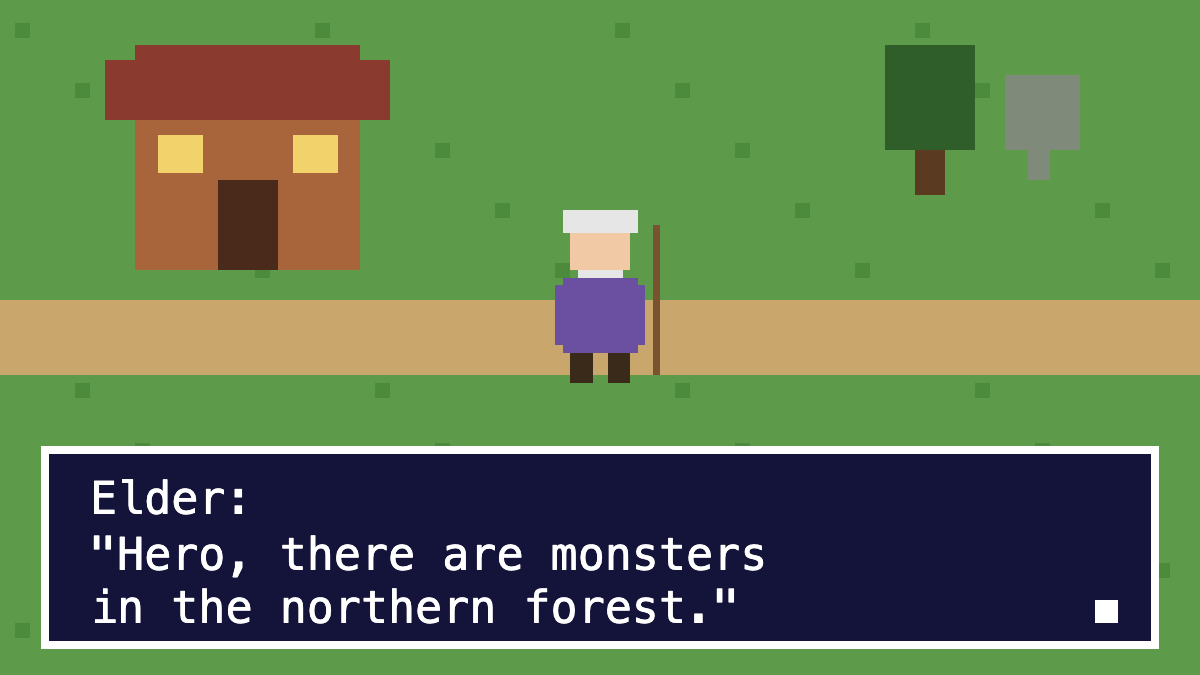
I'm pretty sure a lot of us have had an old man like that.
A couple of days ago I read a post by a developer going by @froessell (which we also covered here). According to @froessell's bio, the author has spent more than 25 years in product design and now makes mobile games solo. The author's game, Last Ember, is a sliding-maze puzzler. By the author's account, going from prototype to a live App Store release took three days, with Claude writing every line of code and the author writing none. The post is blunt about it: "I don't know Unity, and I don't know Godot either." On day one, the AI built movement, 4 worlds, and 120 levels. On day two, it handled the story, the iPhone build, in-app purchases, and the store page, then the author submitted it for review. On November 11, the game went live.
If you're still that 19-year-old from 2003 reading this, how does it land? Probably not as pure excitement. More like a strange, tangled ache—turns out the northern forest was only ever a sentence away.
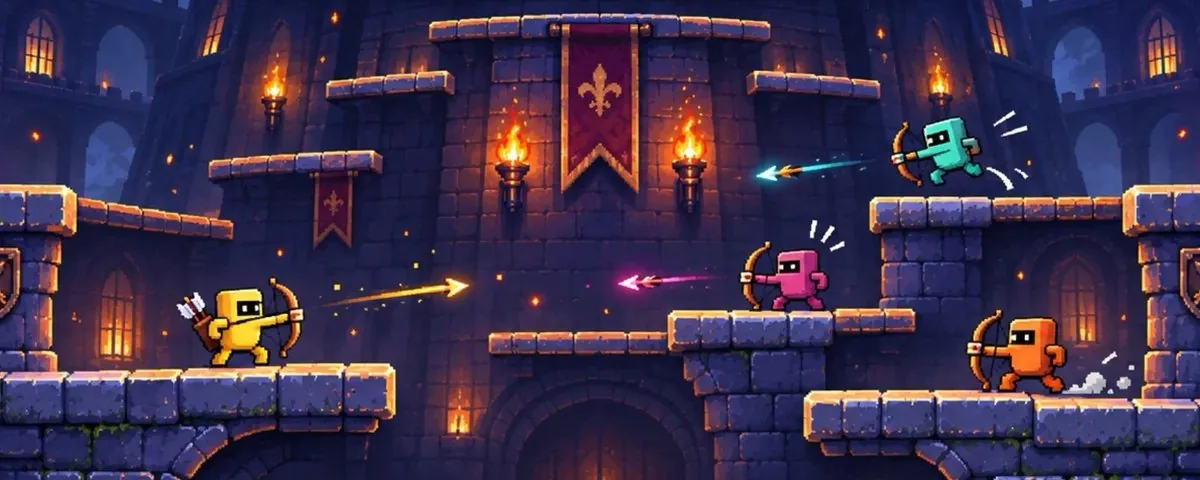
The post itself is nominally about a small decision: why @froessell chose Godot over Unity. The reasoning is practical enough. By the author's account, Unity was slow and heavy on the author's MacBook, forcing a fresh export every time a build needed to be tested on a phone. Godot is lightweight, and a single command pushes the game straight to a handset. The author's workflow is simple: have AI write the code, play the build on a phone, then describe what needs fixing. Naturally, whichever engine makes that loop faster wins.
Tucked behind that small decision, though, is a much bigger tension. According to @froessell's post, on November 17 the Godot Foundation announced the AI agent company Manus as a platinum sponsor, and the replies immediately blew up. The friction was obvious: the contribution policy Godot adopted in June explicitly forbids AI-generated code in the engine itself.
That makes for an interesting picture. An engine that won't let AI touch its own codebase takes money from an AI company, while a growing crowd of developers using that engine don't write a single line of code themselves. I'm not here to hand out verdicts on who's right or wrong. Honestly, I don't think anyone is. It looks more like an intersection where every car is obeying its own signal, and they all just happened to roll into the middle at once.
The question I find more interesting is simpler: how many games are actually being made this way?
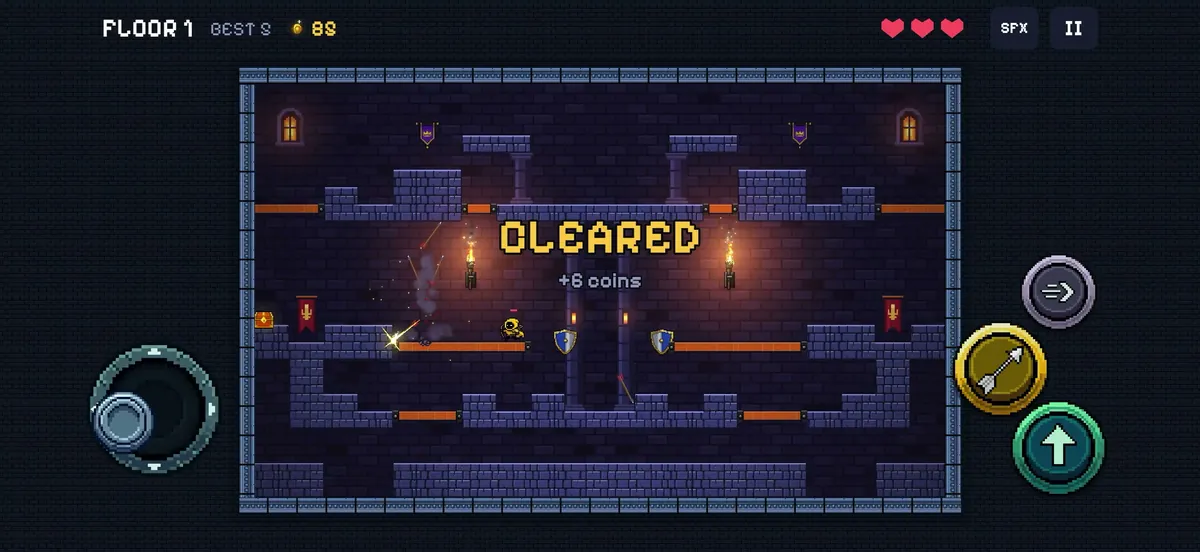
Since January 2024, Steam has required developers to disclose on their store pages whether a game uses AI-generated content. That gives us a blunt instrument, at least. I went through every release tracked on our AI-disclosed new releases list that launched between August 20 and November 13 with an AI disclosure on its store page. That came to 126 games in total.
Let's put two caveats up front. First, that number only covers the new releases tracked on our site, not everything on Steam. Second, these are self-reported disclosures, and the absence of a disclosure doesn't prove AI wasn't used. With that in mind, I did a rough keyword pass across the text (a single game can show up in more than one bucket):
- About 70 mention art, images, textures, or models;
- Around 40 mention music, sound effects, or voice acting;
- Around 30 mention translation and localization;
- 16 explicitly mention writing code;
- Only 3 generate content in real time while the game is running.
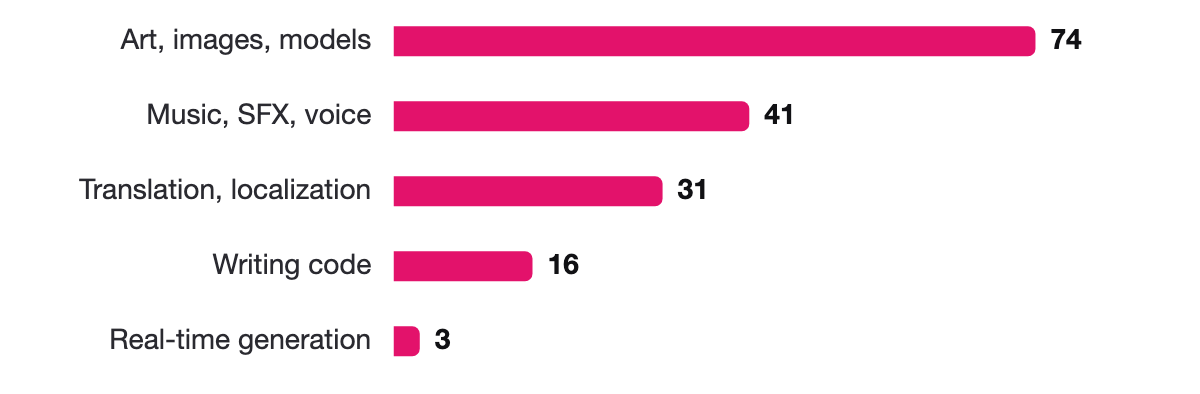
My first reaction looking at those numbers was simple: this bears almost no resemblance to the "AI-made games" we keep picturing in our heads.
In the sci-fi version, a player says a sentence and a whole city sprouts out of thin air. In reality, most developers treat AI like a cheap, compliant, occasionally dim contractor—cranking out a handful of icons, laying down a few background tracks for an in-game radio, translating text into a few extra languages. One game's disclosure is disarmingly plain: "AI was used only to generate the store's capsule and library images." Another reads: "Only several 2D icons are generated with AI." Read enough of these and you start hearing a nervous, please-don't-yell-at-me tone, like a kid who sneaked a cheat sheet into a test, confesses when handing in the paper, and hurries to add, "I only copied one multiple-choice question."
And only 16 mention code. That's the number that surprised me most. On developer social media, AI coding is the loudest topic in the room, yet in store-page disclosures it barely registers as a minority. Of course, plenty of devs may simply feel code doesn't count as "content" and doesn't need to be disclosed. Which explanation is closer to the truth, I don't know, and 126 disclosures aren't going to settle it.


Back to @froessell. The most valuable part of the post isn't the "three days" headline; it's the four habits the author lays out. Make the game runnable from the command line so the AI can take its own screenshots and verify whether a fix worked. Store levels as text files and run scripts to check that every single one is solvable, "so I don't have to play through all 120 levels myself." Keep game rules separate from visuals, backed by tests to make sure the ported build plays identically to the original web version. And set up a single command to push the game onto a phone.
Look closely at those four practices. Not a single one is about how to get the AI to write better code. Every single one is about how to let a human find out faster whether the AI got it right.
It reminds me of the point-and-shoot camera. Before point-and-shoots went mainstream in the 1990s, photography was a craft: metering light, pulling focus, balancing aperture and shutter speed, then heading into a darkroom to develop the film. The point-and-shoot automated all of it and left you with a button. Plenty of people worried photographers would be out of a job. They weren't. Far more people started taking pictures, and there were more good photos too, though I'd guess the share of good ones stayed about the same as before. The point-and-shoot erased the question of whether you knew how to operate the gear; it never touched the question of whether you had an eye. When everyone can press the shutter, the scarce skill becomes picking the one keeper out of a hundred frames.
@froessell notes that it usually takes only a few hours to tell whether a game is actually fun, and the way to tell is by playing it on a phone. That line matters a lot more to me than shipping in three days. The AI gets credit for the three days. Knowing within a few hours whether something is fun belongs to 25 years of product design.
The author is honest about what broke along the way, too. After an in-app purchase, the unlock card showed up blank because Apple's payment callback didn't fire on the main thread, and Godot won't let you add nodes off the main thread. The title screen was a single static image, so phone displays cropped part of it right off. An editor update wiped the export settings, taking the team info and icons with it. Notice that none of those are cases of "the AI couldn't write it." Every single one is a case of "you only catch this once it's sitting in your hand." A point-and-shoot can still take a blurry photo; spotting where it's blurry is still on you.
I have no desire to wrap this up by declaring that "AI will replace developers" or "AI will never replace developers." Both lines have been repeated to death, and odds are neither one is right.
I just catch myself thinking now and then about that 2003 village, and that old man. That 19-year-old version of you is 42 now. If you get home from work tonight, flip open your laptop, and tell the screen, "There's a forest to the north, and there are monsters in it"—a few minutes later, the forest will probably be sitting right there.
Even so, I suspect you'll end up pausing, staring at the monitor for a long stretch, wondering one thing: is this forest actually any fun?
More than twenty years later, that question hasn't changed a bit.
It used to hide behind a tall pile of "I don't know how," so we always assumed technology was the wall stopping us. Now everything blocking the view has been cleared out of the way, and we finally have to face the question itself—which might turn out to be the hardest part of all.
The account and figures regarding @froessell come from @froessell's November 20, 2026 post on X; the Godot sponsorship detail is relayed from that post. AI disclosure data comes from new releases tracked on steamgame.ai; the counting method is described in the essay.